

Best Sea View Resorts in Goa
Best Sea View Resorts in Goa: Stay Right on the Shore 🌊
Goa is synonymous with sun-kissed beaches, balmy coastal breezes, and laid‑back charm. For travellers who dream of waking up to the sound of waves and the sight of endless sea, the sea view resorts of Goa are the perfect choice. From budget beachfront stays to luxury resorts with private beach access, this guide explores the best seaside havens across North and South Goa.

Best Sea View Resorts in Goa
Top Sea-View Resorts in Goa
here’s a curated guide to sea-view resorts, their approximate rates, locations, and what makes them special.
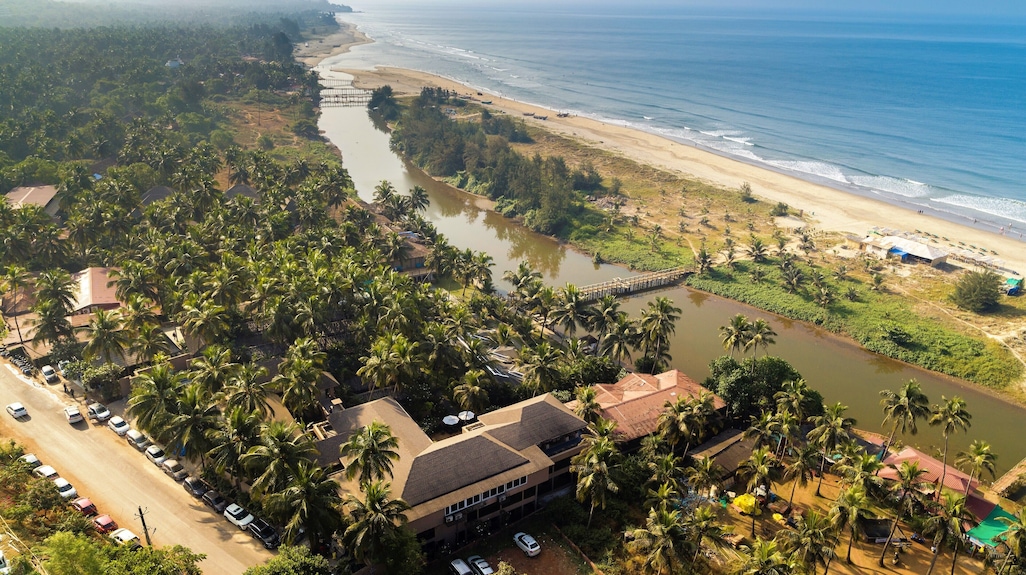
1.Riva Beach Resort – Mandrem (North Goa)
-
Location: Mandrem Beach
-
Price: ₹6,500 (deluxe garden), ₹8,000 (partial sea view), ₹9,000 (sea view) per night
-
Highlights: Boutique, tranquil beachfront, spa and yoga by the sea, romantic vibe.
2.Chalston Beach Resort – Calangute (North Goa)
-
Location: Calangute/Baga area
-
Price: ~₹5,000 per night viacation.com
-
Highlights: Easy beach access, budget-friendly, relaxed vibe ideal for families or groups.

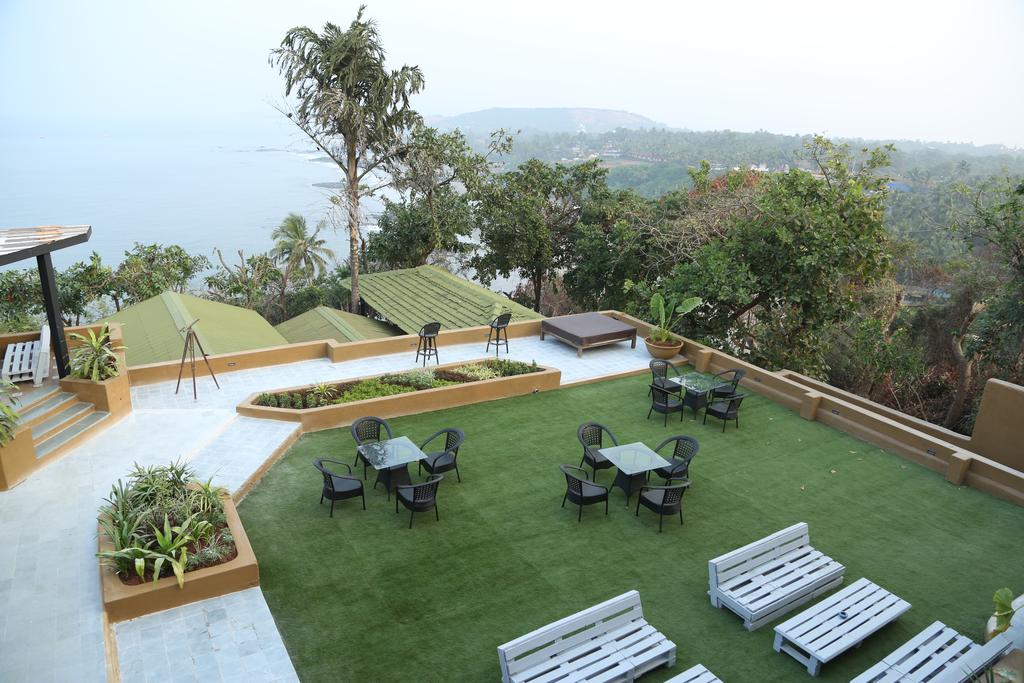
3.Shalai The Cliff Resort – Vagator (North Goa)
-
Location: Cliffside overlooking Vagator/Ozran Beach
-
Price: ₹4,400 per room (discounted from ₹5,600) https://www.thrillophilia.com/
-
Highlights: Scenic cliff-top views, sea-facing rooms, pool, games area, water sports nearby.
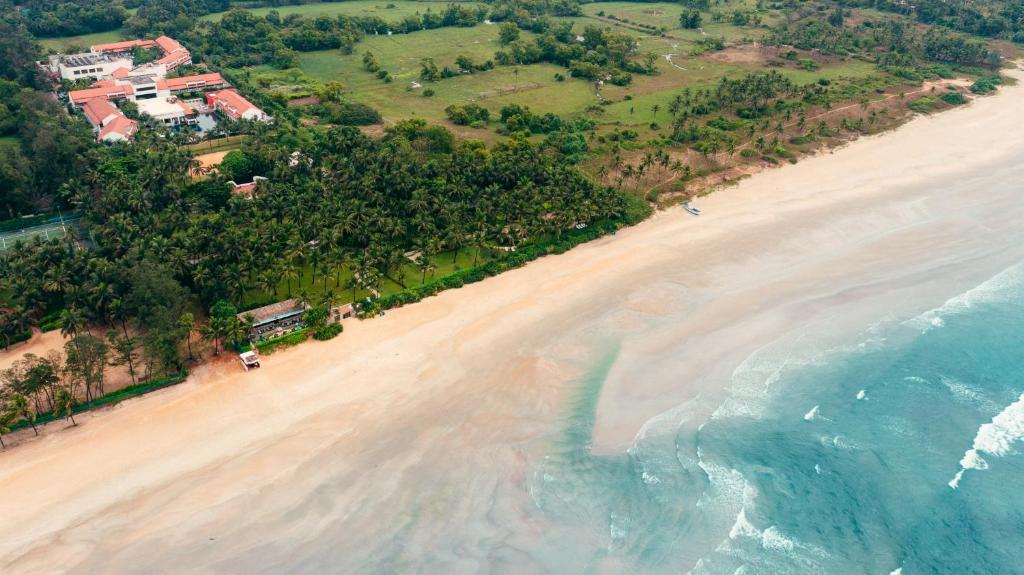
4.Planet Hollywood Beach Resort – Utorda (South Goa)
-
Location: Utorda Beach, Salcette
-
Price: ~₹8,000 per night
-
Highlights: Hollywood-themed luxury, pool & spa, ideal for families and upscale travelers.
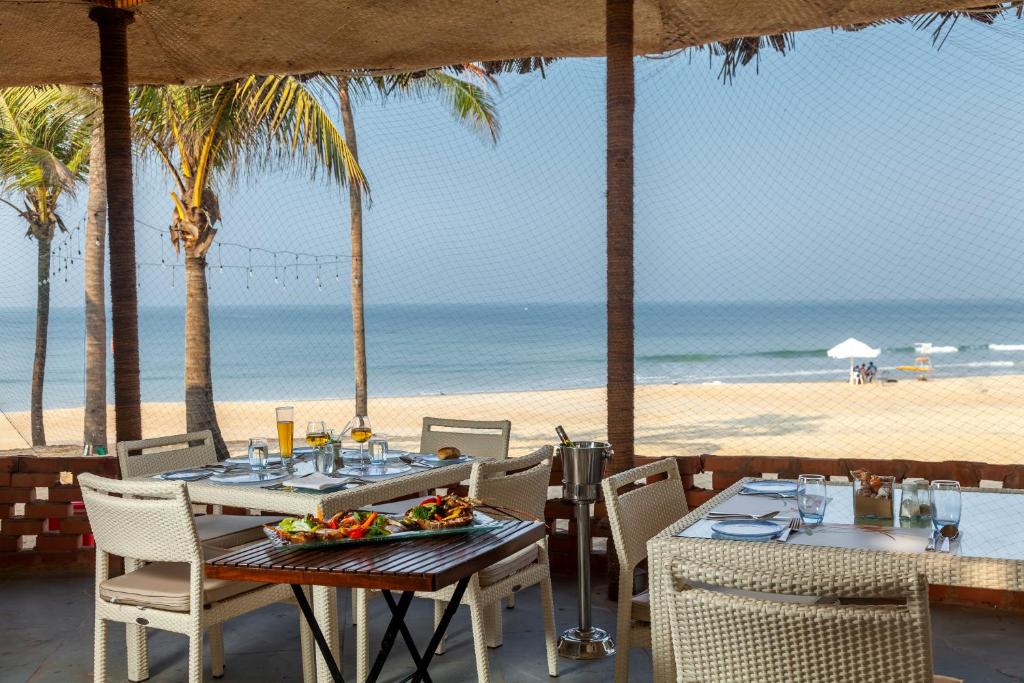
5.Caravela Beach Resort – Varca (South Goa)
-
Location: Varca Beach, Cavelossim region
-
Price: ₹12,000+ per night for two
-
Highlights: Private beach, golf course, multiple dining options, spa and spacious grounds.
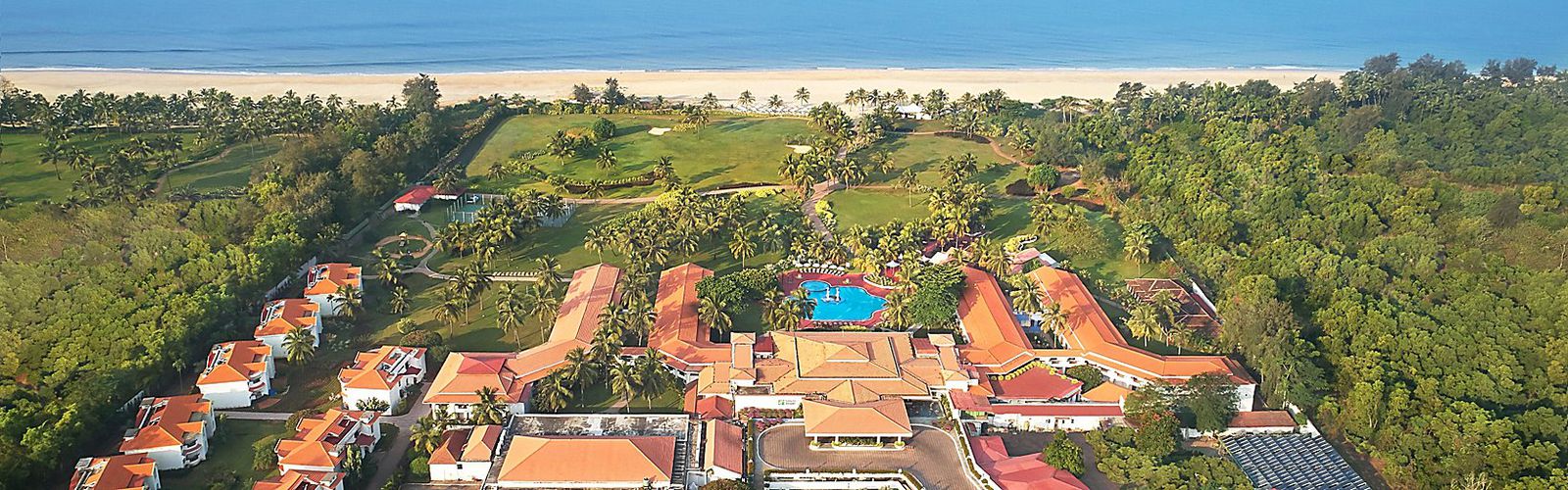
6.Holiday Inn Resort Goa – Mobor (South Goa)
-
Location: Mobor Beach, near Cavelossim
-
Price: ₹9,000 per night for two
-
Highlights: Mediterranean-themed property, beachfront pool, family-friendly amenities.
7.The Zuri White Sands – Varca (South Goa)
-
Location: Varca Beach, Salcete
-
Price: ₹18,900+ per night
-
Highlights: Grand resort, casino, swim-up bar, premium spa and large pool area.

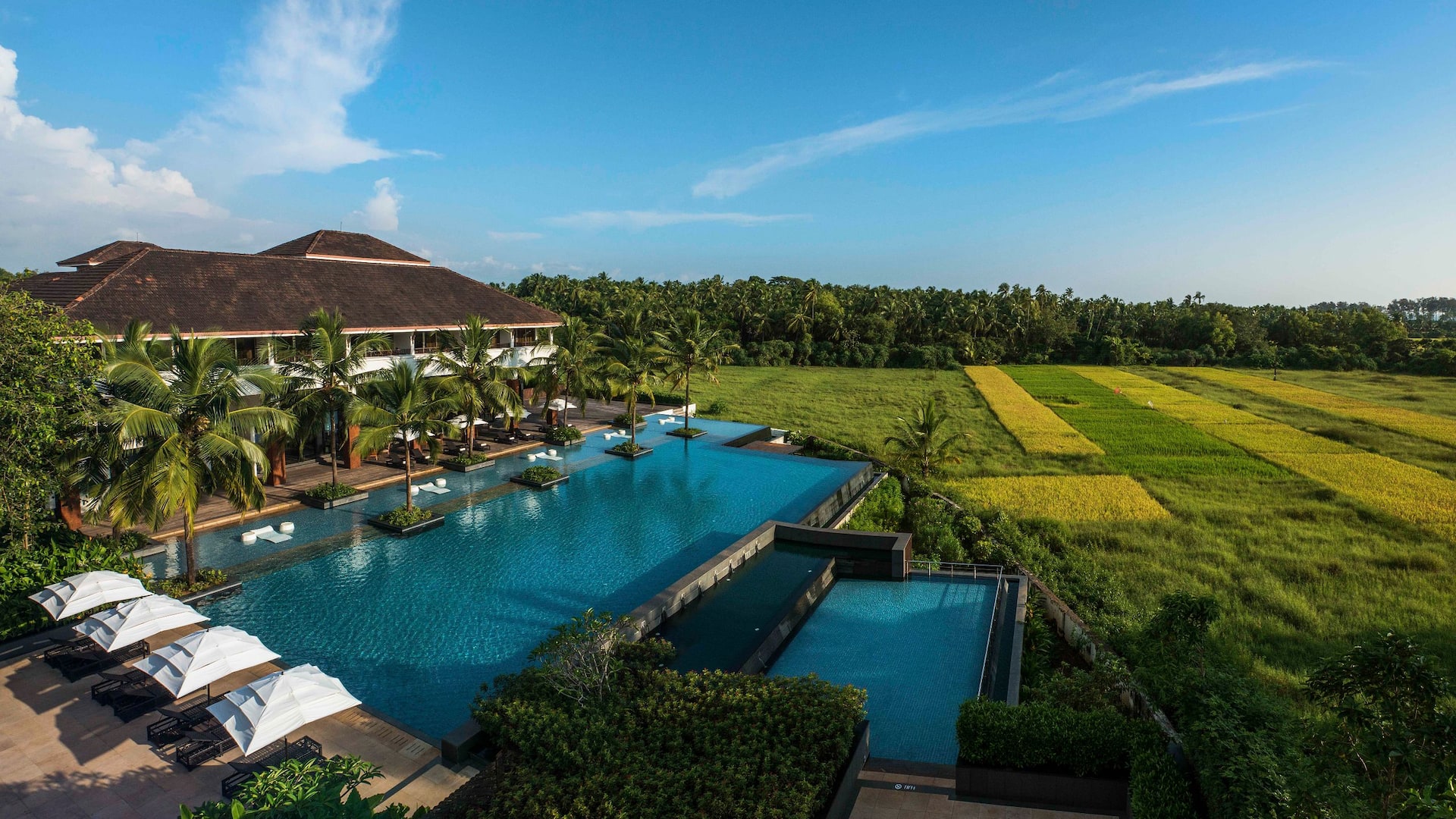
8.Alila Diwa Goa – Majorda (South Goa)
-
Location: Near Majorda Beach, surrounded by verdant paddy fields.
-
Tariff: Begins around ₹10,000 for garden/pool-view rooms; occasionally discounted to ~₹16,500 suite packages https://www.thrillophilia.com/
-
Notable: Award‑winning wellness spa, infinity pool, Indo‑Portuguese design, tranquil setting away from crowds.
Summary
| Resort Name | Area/Beach | Approx. Price (INR/night for two) |
|---|---|---|
| Riva Beach Resort | Mandrem, North Goa | ₹6,500 – 9,000 |
| Chalston Beach Resort | Calangute/Baga, North Goa | ~₹5,000 |
| Shalai The Cliff Resort | Vagator (Vagator/Ozran), North Goa | ₹4,400 |
| Planet Hollywood Beach Resort | Utorda, South Goa | ~₹8,000 |
| Caravela Beach Resort | Varca, South Goa | ₹12,000+ |
| Holiday Inn Resort Goa | Mobor/Cavelossim, South Goa | ₹9,000 |
| The Zuri White Sands | Varca, South Goa | ₹18,900+ |
Book a Sea‑View Resort in Goa
-
Private beach access and panoramic ocean views.
-
Wide price range—from ₹4,400 to ₹18,900—suiting budget travelers and luxury seekers alike.
-
Top locations:
-
North Goa (Mandrem, Vagator, Calangute): ideal for beach life and nightlife.
-
South Goa (Varca, Utorda, Mobor): perfect for tranquility and relaxation.
-
What’s the best area for calm beaches and sunsets in goa?
A: South Goa (Varca, Mobor, Utorda). Resorts like Caravela and Holiday Inn offer serene settings with gorgeous sunset views.
Which resorts suit families?
A: Holiday Inn (Mobor), Caravela (Varca), and Planet Hollywood (Utorda) offer child-friendly amenities and pools.
When is the best time to visit?
A: Mid‑November to February is ideal—pleasant weather and vibrant beach side life.
Experience & Why These Resorts Stand Out
-
Unique Ambiance: From cliff‑side views at Ozran Heights to lush Portuguese‑style gardens at Lalit and Alila.
-
Varied Budgets: Options span ₹4,500 budget stays (Longuinhos, Ozran) to high‑end ₹16,000+ (Azaya & Alila).
-
Diverse Locations:
-
North Goa (Vagator, Mandrem) for energy, water‑sports, and lively sunsets.
-
South Goa (Varca, Colva, Majorda, Benaulim) for serene beaches and family retreats.
-
-
Amenities: Pools, spa, in‑house restaurants, water‑sports, kids’ play areas, ayurvedic wellness.
TIPS
-
Book early if traveling during the festive season (Dec–Jan) to lock in better rates.
-
Choose based on vibe: North Goa for action and nightlife, South Goa for peaceful beaches.
-
Check for meal packages and spa options to enhance your stay.
-
Confirm water‑sports availability with the resort—some offer packages; others coordinate via local vendors.






[…] Best Sea View Resorts in Goa […]
Your point of view caught my eye and was very interesting. Thanks. I have a question for you.